Filters are the heart of your purifier. When they are fresh, water is clean, flow is strong and the pump runs easily. When they are worn out, every other part has to work harder and water quality drops. This guide covers RO water purifier filter replacement: the warning signs, typical timing for each stage and what affects the cost.
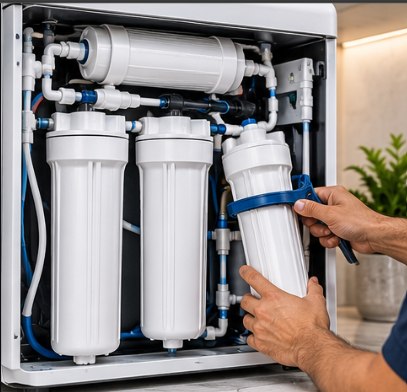
The filters inside a typical RO purifier
- Sediment filter: traps sand, rust and visible particles.
- Pre-carbon filter: removes chlorine and organic chemicals that would damage the membrane.
- RO membrane: removes dissolved salts, hardness and many heavy metals.
- Post-carbon filter: polishes taste and smell.
- Optional stages: UV lamp, UF membrane, mineral or alkaline cartridge.
Signs your filters need replacing
- Slow filling or low flow. Usually choked sediment or carbon filters.
- Salty or bitter taste. The membrane may be exhausted; a TDS test confirms it.
- Bad smell or flat taste. The carbon filters are saturated.
- Discoloured sediment filter. Brown or black filters are clearly overdue.
- Pump noise. The pump strains against blocked filters.
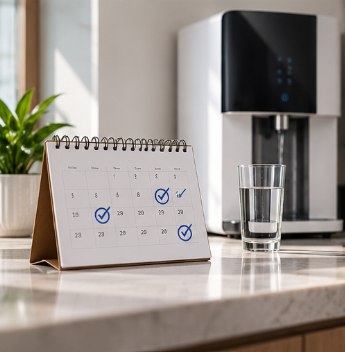
- The indicator is on or it has been more than six months since the last change.
How often each filter is typically replaced
| Stage | Typical life |
|---|---|
| Sediment filter | 6 to 12 months; 3 months with very dirty water |
| Pre- and post-carbon filters | 6 to 12 months |
| RO membrane | 1 to 3 years |
| UV lamp | About 1 year |
| UF membrane | 1 to 2 years |
| Mineral or alkaline cartridge | 6 to 12 months |
These are guides only. Borewell and tanker water shortens every interval. See how often to service an RO for a full schedule.
What affects the cost of filter replacement
- How many stages are due. A sediment filter alone costs much less than a full set plus a membrane.
- Your purifier's brand and design. Some brands use proprietary cartridges that cost more than standard 10-inch inline filters.
- Original vs compatible parts. Original parts generally cost more.
- Membrane size. Higher-capacity membranes cost more.
For a detailed look at part prices, read our RO filter price guide.
Why correct fitting matters
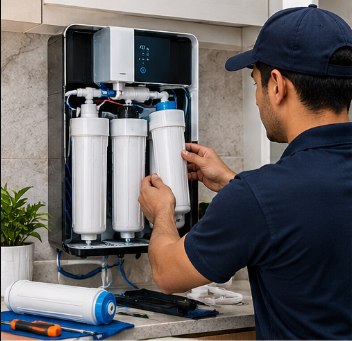
A new filter only works if it is seated properly. Poorly fitted filters cause leaks, let unfiltered water bypass the stage, or trap air that stops flow. After a change, the technician should flush the new carbon filters, check every O-ring and test TDS and flow.
Book a filter change
A routine RO service includes checking every filter and replacing only what is due.
Frequently asked questions
Can I change only one filter?
Yes. Each stage wears at a different rate, so a technician should replace only what is due. The sediment filter is usually changed most often.
Do I need to replace the membrane every time I change filters?
No. The membrane typically lasts 1 to 3 years. It is replaced when output TDS rises or flow drops even with fresh pre-filters.
Are compatible filters safe to use?
Good-quality compatible filters of the correct size and rating can work well. Poor-quality filters may not fit properly or may use weak filter media. Ask for the brand and check the seals.
Need help with your purifier?
Share your purifier brand and the problem. We will call back with the next available slot.