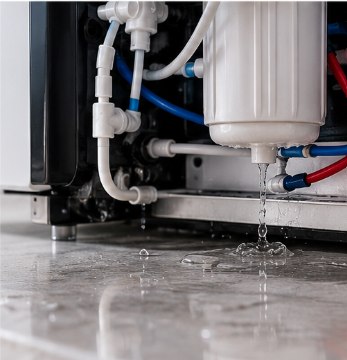
A puddle under the sink or water dripping down the wall is a sign that something inside your purifier has come loose, cracked or worn out. A leaking water purifier is rarely complicated to fix, but it should be dealt with quickly, because water damage to cabinets and walls costs far more than the repair.
What to do as soon as you notice a leak
- Close the inlet valve that feeds the purifier.
- Switch off and unplug the purifier. Water and electricity should not mix.
- Dry the area and place a cloth or tray under the unit.
- Note where the water seems to come from, such as a joint, the tank, the tap or the drain line. This helps the technician.
The most common causes of RO leaks
Loose push-fit connectors
RO purifiers use quick-connect fittings for their pipes. If a pipe is not pushed in fully, is cut at an angle, or the locking clip is missing, it can seep. This is the most common cause and the easiest to fix.
Worn or misplaced O-rings
Filter housings seal with rubber O-rings. After a filter change, an O-ring can twist or dry out. The leak appears around the top or bottom of the housing.
Cracked filter housing
Over-tightening, high pressure or age can crack a plastic housing. A cracked housing must be replaced; it cannot be sealed safely.
Damaged or brittle pipes
Pipes near heat sources or exposed to sunlight become brittle. Kinked pipes can split.
Overflowing tank
If the float valve or high-pressure switch fails, the purifier keeps filling and water overflows from the vent. You may hear the pump running non-stop.
Faulty tap or dispenser
Drips from the tap itself usually mean a worn washer or a cracked tap body.
Drain line problems
A loose drain saddle or blocked drain pipe can push reject water back out of the fittings.
High input pressure
In high-rise buildings, line pressure can be higher than a domestic purifier is designed for. A pressure-reducing valve protects the system.
How a technician fixes a leak
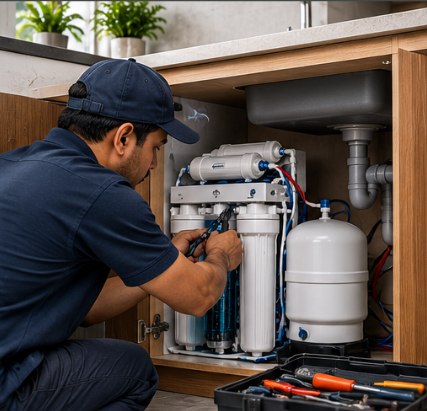
The technician dries the unit, restores water pressure and watches each stage to find the exact source. Depending on the cause, the fix may be re-cutting and refitting a pipe, replacing an O-ring, fitting a new housing, replacing the float or high-pressure switch, or adding a pressure-reducing valve. The unit is then run and checked again before handover.
If a leak happened right after a new installation or a move, poor fitting is likely. Our guide to RO installation explains what a proper installation should include.
How to prevent leaks
- Have filters changed by a technician who checks the O-rings each time.
- Do not over-tighten housings by hand.
- Keep the purifier away from stoves and direct sunlight.
- Fit a pressure-reducing valve if your building has high line pressure.
- Service the purifier every 3 to 6 months so worn parts are caught early.
Leaking now? Book an RO repair. For other faults, see common RO problems and solutions.
Frequently asked questions
Is a small drip from my RO dangerous?
A slow drip will not harm the water quality, but it can damage kitchen cabinets and walls over time, and it often gets worse. It is worth fixing early.
Can I use Teflon tape to stop a leak?
Teflon tape works on threaded joints only. Most RO leaks are at push-fit connectors, O-rings or cracked housings, where tape does not help.
Why does my RO leak only at night?
At night there is less water use in the building, so line pressure rises. A weak joint that holds during the day can start leaking under the higher pressure. A pressure-reducing valve may be needed.
Need help with your purifier?
Share your purifier brand and the problem. We will call back with the next available slot.