Restaurants, hotels, hospitals, schools, factories and offices all need a reliable supply of purified water. A commercial water purifier machine, usually called a commercial RO plant, is designed for continuous duty and much higher output than a home unit. Choosing the right one starts with your water and your daily demand.
1. Start with a water analysis
A laboratory test of your raw water should be the first step. Key parameters include TDS, hardness, iron, turbidity, chlorine, pH and, in some areas, silica or fluoride. The results decide which pre-treatment you need and which membranes will last.
2. Work out the capacity you need
- Estimate daily purified-water demand in litres.
- Decide how many hours a day the plant will run.
- Divide demand by running hours to get a minimum LPH, then add a margin for peaks and growth.
Example: 2,000 litres a day over 10 running hours needs at least 200 LPH; a 250 LPH plant with a storage tank gives headroom.
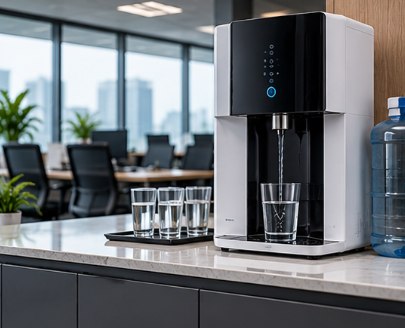
Common commercial sizes run from 25 LPH for small offices to 1,000 LPH and above for industrial use. Our office purifier guide covers smaller setups.
3. Pre-treatment: the part people underestimate
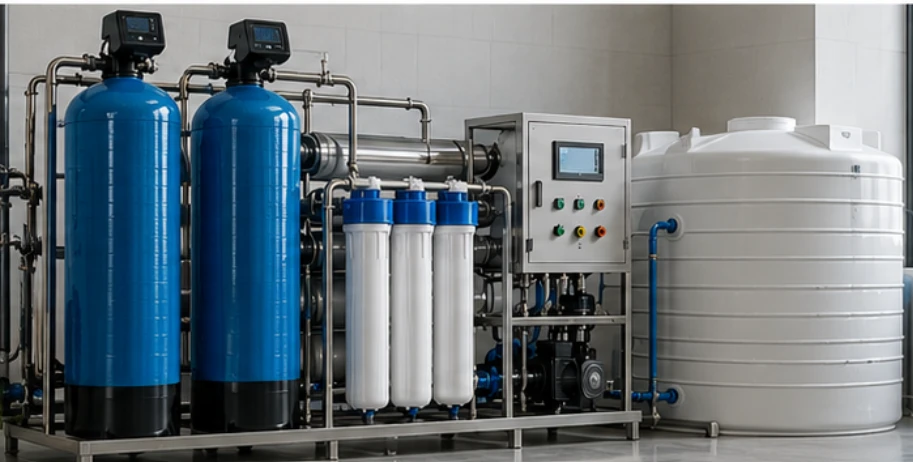
Good pre-treatment protects the expensive membranes. Depending on the water test, a plant may need:
- Multimedia or sand filter for turbidity and suspended solids.
- Activated carbon filter for chlorine and organics.
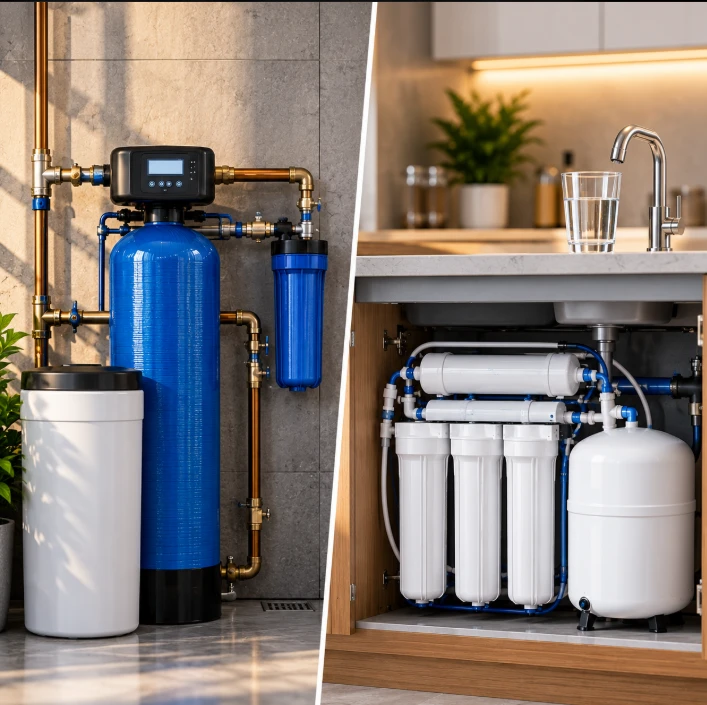
- Water softener for high hardness. See softener vs RO.
- Iron removal filter for iron-rich groundwater.
- Antiscalant dosing to reduce scaling on membranes.
- Micron cartridge filters just before the high-pressure pump.
4. Recovery and reject water
Recovery is the share of input water that becomes purified output. Higher recovery saves water but raises scaling risk. A good design balances the two for your water, and plans how reject water will be drained or reused.
5. Materials and build
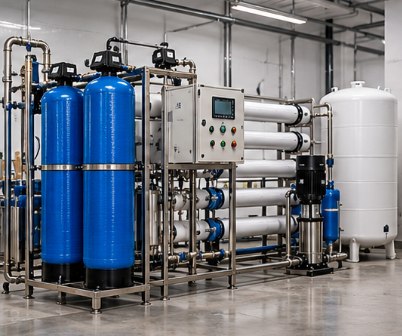
- FRP or stainless steel pressure vessels and filter housings.
- Stainless steel frame or skid for durability.
- Food-grade piping for drinking water applications.
- A pump sized for your membranes and input pressure.
6. Controls and post-treatment
- Automatic start-stop with tank level controls.
- Low-pressure and high-pressure protection.
- TDS or conductivity monitoring and flow meters.
- UV or ozone disinfection on the product water storage.
7. Plan maintenance before you buy
A commercial plant needs regular attention: cartridge changes, membrane cleaning, dosing checks and logs. Ask for a service plan with clear response times. Our guide to RO plant maintenance explains what is involved.
See our commercial RO service, or ask us to size a plant for your site.
Frequently asked questions
What does LPH mean for an RO plant?
LPH means litres per hour of purified output. A 250 LPH plant produces about 250 litres of permeate an hour under its rated conditions.
Why does a commercial RO plant need a water test?
The test decides the pre-treatment, membrane type, pump size and expected recovery. Without it, a plant may foul quickly or fail to reach the output you need.
How much space does a commercial RO plant need?
Small 25 to 100 LPH units fit on a wall or small skid. Larger plants with pre-treatment vessels and tanks need a dedicated room or utility area with drainage and power.
Need help with your purifier?
Share your purifier brand and the problem. We will call back with the next available slot.