A purifier that works well in a home can struggle in an office, where dozens of people fill bottles at the same time. The key to choosing a water purifier machine for an office is getting the capacity right, then planning how it will be maintained.
Step 1: estimate daily demand
A simple way to estimate:
- People: count staff plus typical daily visitors.
- Drinking water: allow about 2 litres per person per working day.
- Pantry use: add water for tea, coffee and cooking if the pantry uses purified water.
- Buffer: add 20 to 30% for hot days and growth.
Example: 50 people × 2 L = 100 L, plus 20 L for the pantry, plus a 25% buffer ≈ 150 litres a day.
Step 2: think about peak demand
Offices do not use water evenly. Demand spikes in the morning, at lunch and after breaks. Two numbers matter:
- Output (LPH): litres per hour the purifier produces.
- Storage: how much purified water is ready at once for peaks.
A purifier with modest output but generous storage handles peaks better than one with high output and a tiny tank.
Step 3: choose the right setup
| Office size | Typical setup |
|---|---|
| Up to about 15 people | Domestic RO with 10 L+ storage, or a purifier-dispenser |
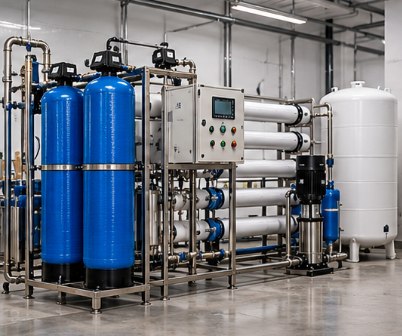
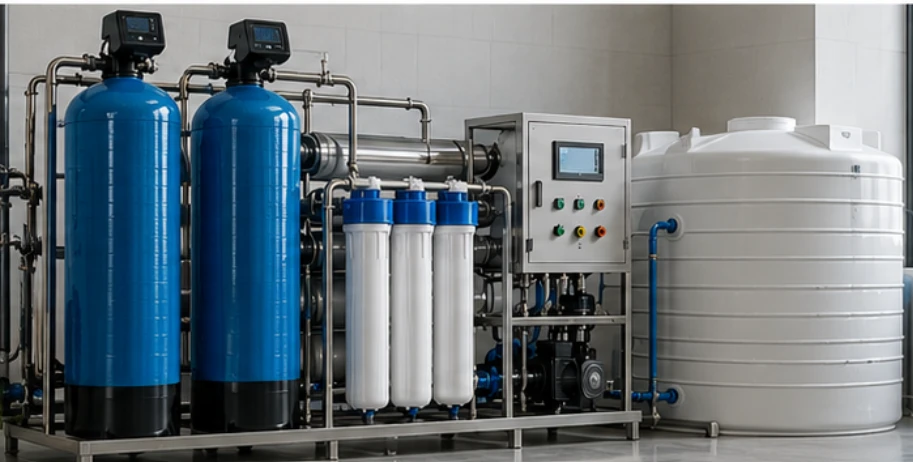
| 15 to 50 people | Commercial RO of around 25 to 50 LPH with a storage tank, or an RO water cooler |
| 50 to 150 people | Commercial RO plant, roughly 50 to 100 LPH, feeding coolers or dispensers |
| Larger campuses | Central RO plant with distribution, sized after a water test |
These are starting points; water quality and usage patterns can shift the choice. For larger systems, see how to select a commercial RO plant.
Step 4: hot and cold water
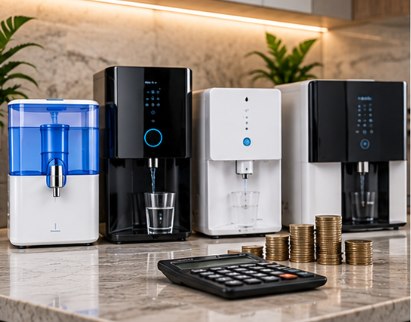
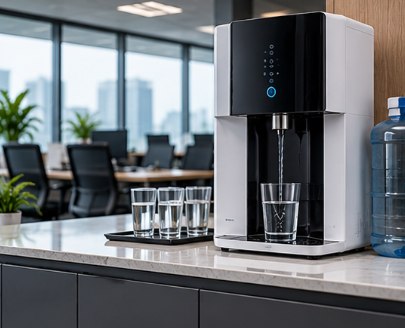
Many offices want chilled and hot water. Options include a purifier feeding a water cooler, or a hot-and-cold dispenser fed by purified water.
Step 5: plan maintenance from day one
- Shared purifiers need more frequent service, often monthly or quarterly.
- Keep a service log visible near the unit.
- Clean dispensing taps and drip trays daily.
- An AMC with guaranteed response times avoids days without water. See RO plant maintenance.
Get it sized properly
Tell us your headcount, floor layout and water source, and we will recommend a setup. Explore our commercial RO service.
Frequently asked questions
How much drinking water does an office need per person?
A common planning figure is about 2 litres per person per working day for drinking, plus extra for tea, coffee and a pantry.
Can I use a home purifier in a small office?
For up to about 10 to 15 people with steady use, a good domestic RO with 10 or more litres of storage can work. Beyond that, a commercial unit is more reliable.
Do offices need more frequent servicing?
Usually yes. Heavy, shared use wears filters faster, and hygiene matters more when many people use the same unit. Monthly or quarterly checks are common.
Need help with your purifier?
Share your purifier brand and the problem. We will call back with the next available slot.