RO removes most dissolved salts from water, including the calcium and magnesium that give water its taste. A mineral RO purifier adds a stage after the membrane to put some of those minerals back. Here is how it works, what it does well and what it does not.
Why RO water needs mineral adjustment
A good RO membrane can bring TDS down from several hundred mg/L to below 50 mg/L. That water is pure, but it can taste flat or slightly sour to many people. Mineral adjustment brings TDS back up to a more natural level and improves the taste. Read why RO water tastes different for the full explanation.
Two ways purifiers add minerals back
1. Mineral cartridge
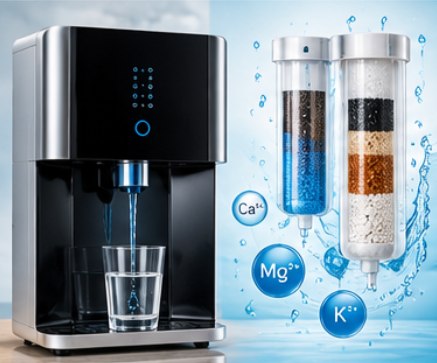
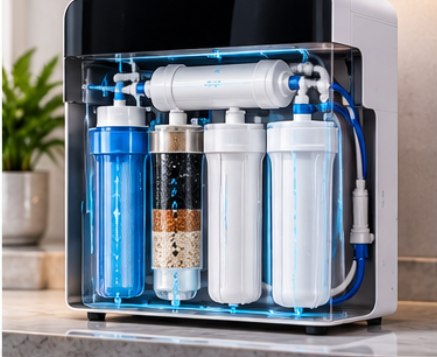
A small cartridge after the RO membrane contains mineral media, often calcium and magnesium compounds. As RO water passes through, small amounts dissolve into it, raising TDS slightly and improving taste.
2. TDS controller (TDS adjuster)
A valve that lets a small, controlled amount of pre-filtered (but not RO-treated) water mix with the RO water. This keeps some of the original minerals. On RO + UV + UF purifiers, the blended water still passes through UV or UF, so germs are handled. The technician sets it based on your input TDS.
Many purifiers sold as “mineral RO” have one or both of these stages.
What a mineral stage does and does not do
| Does | Does not |
|---|---|
| Improve taste of very low TDS water | Replace a balanced diet as a mineral source |
| Raise TDS slightly | Add any purification of its own |
| Often raise pH a little | Turn RO water into “alkaline water” with strong claims |
If you are interested in higher pH water, read what an alkaline purifier is.
Who should choose a mineral RO?
- Homes that need RO because of high TDS but dislike the taste of plain RO water.
- Homes with a mixed supply where TDS varies through the year.
- Anyone whose RO output TDS reads below about 50 mg/L.
If your water is already low in TDS, you may not need RO at all. See RO vs non-RO purifiers.
Maintenance
Mineral cartridges are used up gradually, typically over 6 to 12 months. When the cartridge is exhausted, taste goes back to flat. A TDS controller can also drift and should be checked during each routine service, especially if your input water changes.
Not sure whether you need one? Ask us for a recommendation based on your water.
Frequently asked questions
Does a mineral cartridge make RO water as healthy as natural water?
It adds back small amounts of minerals such as calcium and magnesium, which mainly improves taste. Most of our mineral intake comes from food, not drinking water.
How often is the mineral cartridge replaced?
Typically every 6 to 12 months, along with the carbon filters. A technician can check it during a routine service.
What is the difference between a TDS controller and a mineral cartridge?
A TDS controller blends a little filtered but non-RO water back in. A mineral cartridge dissolves added minerals into the RO water. Some purifiers have both.
Need help with your purifier?
Share your purifier brand and the problem. We will call back with the next available slot.