Not every home needs reverse osmosis. A water purifier without RO, such as a UV, UF or gravity purifier, can be the better choice for low-TDS water. It keeps natural minerals, wastes no water and usually costs less to run. Here are the key differences so you can decide.
What counts as a non-RO purifier?
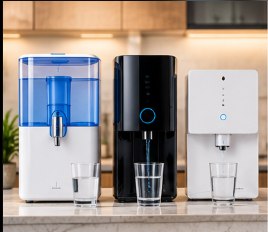
- UV purifiers: inactivate bacteria and viruses with ultraviolet light.
- UF purifiers: block bacteria, cysts and particles with a hollow-fibre membrane, often without electricity.
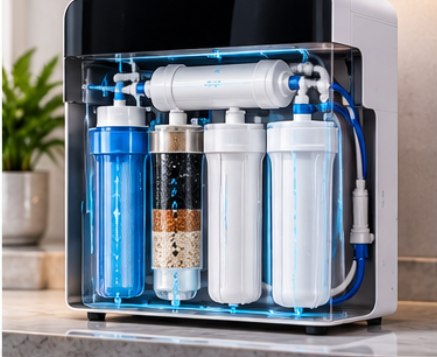
- UV + UF purifiers: combine both, usually with a carbon filter for taste.
- Gravity purifiers: use carbon and UF stages with no power or pressure needed.
Key differences at a glance
| RO purifier | Non-RO purifier | |
|---|---|---|
| Reduces TDS, hardness, salts | Yes | No |
| Handles germs | Yes, best with UV or UF | Yes (UV and/or UF) |
| Keeps natural minerals | No, unless a mineral stage is added | Yes |
| Water wastage | Some reject water | None |
| Electricity | Needed for the pump | UV needs power; UF and gravity often do not |
| Running cost | Higher (membrane, more filters) | Lower |
| Suitable water | High-TDS, borewell, tanker | Low-TDS municipal |
When a non-RO purifier is the better choice
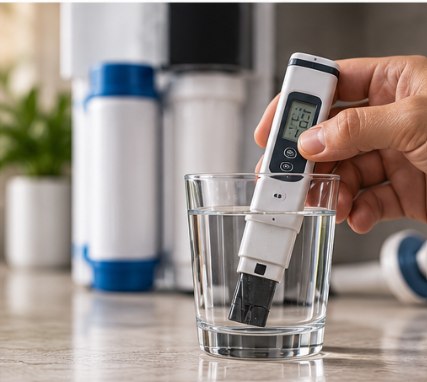
- Your TDS is below about 300 mg/L and does not change through the year.
- You get treated municipal water, not borewell or tanker water.
- You want to avoid water wastage.
- You prefer the taste of water with its natural minerals.
- Power cuts are frequent (choose UF or gravity).
When you really do need RO
- TDS above about 500 mg/L, or water that tastes salty.
- Borewell or tanker water, or a supply that changes with the season.
- Hard water that leaves heavy white scale.
- A water test shows contaminants such as excess fluoride, nitrate or arsenic, which RO is known to reduce.
For borewell supplies, see how to choose a purifier for borewell water.
The middle ground: RO with mineral adjustment
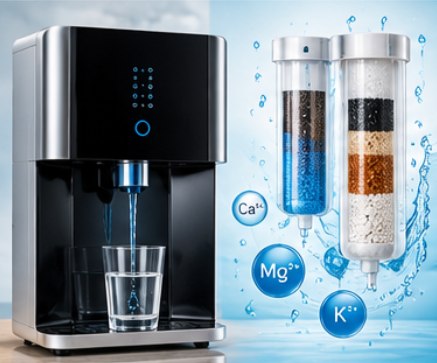
If your TDS sits between 300 and 500 mg/L, or you get a mix of sources, an RO purifier with a TDS controller or mineral cartridge brings TDS down while keeping a pleasant taste. Read what a mineral RO purifier does.
For the full technical comparison, read RO vs UV vs UF, or ask us to test your water before you buy.
Frequently asked questions
Is a non-RO purifier safe?
Yes, for the right water. If your TDS is low and the main concern is germs and particles, a UV + UF purifier treats water effectively. It will not reduce high TDS or hardness.
Does a non-RO purifier waste water?
No. UV, UF and gravity purifiers pass all the input water through, so there is no reject water.
Can I switch from RO to non-RO?
If your water source has changed to a low-TDS supply, yes. Test your TDS first, and ask a technician to confirm before you change.
Need help with your purifier?
Share your purifier brand and the problem. We will call back with the next available slot.