
Many people notice that water from an RO purifier tastes different from tap, bottled or well water. Sometimes that difference is normal and harmless. Sometimes it is an early warning that a filter is due or something needs repair. Here are the common reasons behind changes in RO water taste and what to do about each.
Flat or bland taste
Why it happens: RO removes most dissolved minerals, such as calcium and magnesium, that give water its taste. Water with TDS below about 50 mg/L often tastes flat.
What to do: this is normal. If you dislike it, a TDS controller or mineral cartridge can add some minerals back. See what a mineral RO purifier does.
Slightly sour or acidic taste
Why it happens: carbon dioxide passes through the RO membrane while the minerals that buffer it are removed, so RO water often has a pH a little below 7.
What to do: mineral or alkaline cartridges raise pH slightly. Read about alkaline purifiers before buying one for this reason.
Salty or heavy taste
Why it happens: the RO membrane is worn out and letting salts through, the TDS controller is set too high, or your input water's TDS has risen.
What to do: compare input and output TDS. If output is high, the membrane or controller needs attention. Book a service.
Bitter or metallic taste
Why it happens: an exhausted post-carbon filter, a mineral cartridge that is releasing too much, or iron in the input water slipping through worn pre-filters.
What to do: replace the post-carbon filter and check the mineral stage. For iron-rich borewell water, an extra pre-filter helps.
Plastic or rubber taste
Why it happens: new tanks, pipes and filters, or water standing too long in the tank in a warm kitchen.
What to do: in a new purifier, flush for a day. In an older one, drain the tank and use the purifier daily. If it persists, the tank may need cleaning.
Musty or rotten-egg smell
Why it happens: bacterial growth in the storage tank or a saturated carbon filter, often after the purifier has been unused for a while.
What to do: stop drinking the water, drain the tank and book a service so the tank is sanitised and filters checked. A working UV lamp also matters here.
Chlorine taste
Why it happens: the pre- or post-carbon filter is used up, so chlorine from municipal water passes through.
What to do: replace the carbon filters. Chlorine also damages the RO membrane, so do not delay. See RO filter replacement.
When taste changes, check TDS first
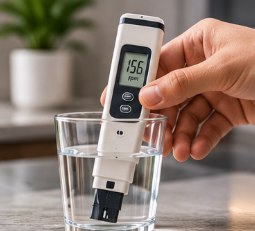
A quick TDS test of input and output water tells you a lot about what is happening inside the purifier. Our guide What is TDS in water? explains how to read it. If taste changes suddenly, book a repair visit and mention the symptom so the technician brings the right parts.
Frequently asked questions
Is flat-tasting RO water safe?
Yes. Flat taste usually just means low TDS, because RO removed most dissolved minerals. A mineral cartridge or TDS controller can improve taste.
Why does my new RO water taste odd?
New carbon filters release fine carbon dust and new tanks and pipes can give a slight plastic taste. Flushing for the first day usually clears it.
My RO water tastes salty. Is the purifier broken?
Salty taste often means the RO membrane is no longer rejecting salts, or the TDS controller is set too high. A TDS test confirms which, and a technician can fix it.
Need help with your purifier?
Share your purifier brand and the problem. We will call back with the next available slot.