Municipal water is treated before it reaches your home, so many people assume a purifier is unnecessary, or that any purifier will do. In reality, city water can still be contaminated on its way to your tap, and the right purifier depends on your supply's TDS and how it is stored in your building. Here is how to choose the best water purifier for municipal water.
What happens to municipal water before it reaches you
Treatment plants filter and disinfect water, usually with chlorine. After that, it travels through kilometres of pipeline and is often stored in underground and overhead tanks in your building. Along the way it can pick up:
- Bacteria from leaking pipes or poorly cleaned tanks.
- Rust and sediment from old pipelines.
- Residual chlorine, which affects taste and smell.
- Mixing with tanker or borewell water when supply is short.
Step 1: check your TDS
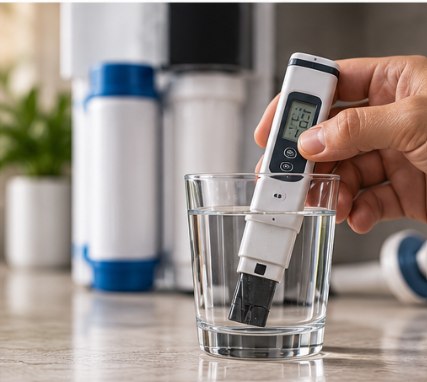
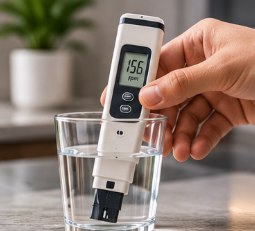
Municipal water in many Indian cities, including much of Mumbai's supply, is usually low in TDS. Measure yours with a TDS meter to be sure. Our guide to TDS in water explains the reading.
- Below about 300 mg/L: RO is usually not needed for salts. UV + UF is a good fit.
- 300 to 500 mg/L: either works; RO with a TDS controller gives better taste in many cases.
- Above about 500 mg/L, or if tanker water is mixed in: choose RO + UV.
Step 2: choose the technology
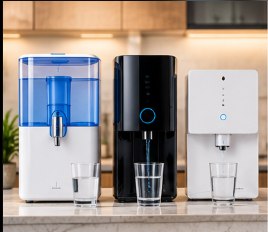
UV + UF: the usual choice for low-TDS supply
UV inactivates bacteria and viruses, and UF blocks bacteria, cysts and fine particles. Together with a carbon filter for chlorine and taste, this treats typical municipal water well and wastes no water.
RO + UV: when the supply is mixed or TDS is higher
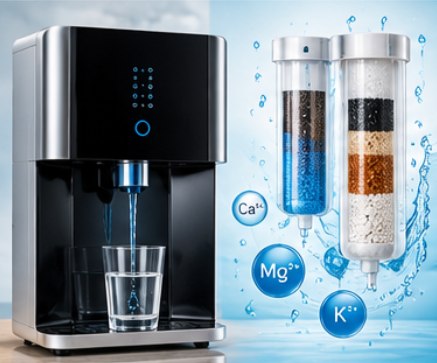
If your building switches to tanker water in summer, or TDS is above about 500 mg/L, RO is the safer option. A TDS controller or mineral cartridge keeps the taste pleasant. See RO vs UV vs UF for a full comparison.
Step 3: features that matter in city homes
- Activated carbon stage to remove chlorine taste and smell.
- Storage tank of 6 to 8 litres for homes with fixed supply hours.
- Compact or under-sink design for small kitchens.
- Filter-life indicator so you know when service is due.
- Low wastage if you choose RO.
Do not forget your building's tanks
Even the best purifier works better with clean input water. Ask your society how often the underground and overhead tanks are cleaned; every six months is a common recommendation.
Unsure whether you need RO at all? Read RO vs non-RO purifiers.
Frequently asked questions
Is municipal water safe to drink without a purifier?
Municipal water is treated at the plant, but it can pick up contamination from old pipelines, leaks and building storage tanks before it reaches your tap. A purifier adds a final barrier at home.
Will RO remove useful minerals from municipal water?
Yes, RO removes most dissolved minerals. If your municipal TDS is already low, a UV + UF purifier keeps those minerals and wastes no water.
My building mixes municipal and tanker water. What should I buy?
If the source changes, choose for the worst case. An RO + UV purifier with a TDS controller handles both.
Need help with your purifier?
Share your purifier brand and the problem. We will call back with the next available slot.