Walk into any appliance store and you will see purifiers labelled RO, UV, UF, or all three together. Each type of water filter for home use solves a different problem. Choosing the wrong one means either paying for purification you do not need or, worse, drinking water that is not properly treated. Here is how they compare.
How each technology works
RO (reverse osmosis)
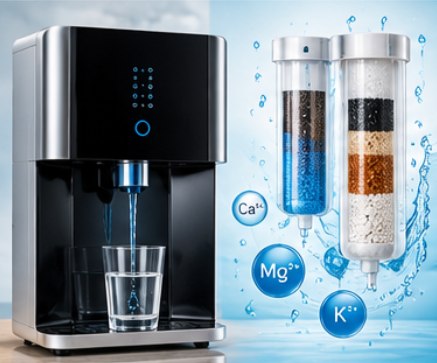
Water is pushed by a pump through a very fine membrane. The membrane lets water molecules through but holds back most dissolved salts, hardness, and many heavy metals and chemicals, which are flushed away with reject water.
UV (ultraviolet)
Water passes a UV lamp that inactivates bacteria and viruses so they cannot multiply. UV does not remove anything from the water. Dissolved salts, chemicals and dead microbes remain.
UF (ultrafiltration)
A hollow-fibre membrane physically blocks bacteria, cysts and fine particles. Its pores are larger than an RO membrane's, so dissolved salts pass straight through. Most UF units need no electricity.
Side-by-side comparison
| RO | UV | UF | |
|---|---|---|---|
| Reduces TDS and hardness | Yes | No | No |
| Handles bacteria and viruses | Mostly | Yes (inactivates) | Bacteria and cysts |
| Removes dirt and turbidity | Yes, with pre-filters | No, needs clear water | Yes |
| Needs electricity | Yes | Yes | Usually no |
| Wastes water | Yes (reject water) | No | No |
| Best for | High-TDS, borewell, tanker | Low-TDS, clear municipal | Low-TDS, power cuts |
Why combinations are so common
Each technology covers the others' gaps. RO reduces salts, UV adds a dedicated germ barrier after the storage tank, and UF adds a physical barrier against bacteria and particles. That is why RO + UV + UF purifiers are the most popular choice for water from mixed or uncertain sources.
How to choose for your home
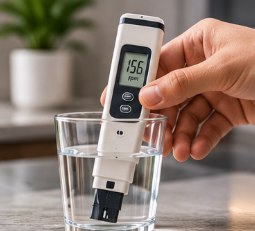
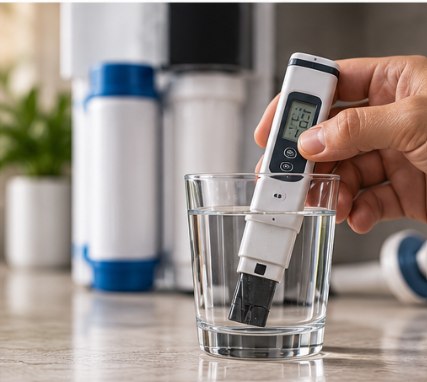
- Test your TDS. A TDS meter gives a quick reading. Read what TDS means to interpret it.
- Know your source. Municipal, borewell, tanker or a mix.
- Match the technology:
- TDS above about 500 mg/L, borewell or tanker water: RO + UV (+ UF).
- TDS below about 300 mg/L, clear municipal water: UV + UF is usually enough.
- In between, or the source changes through the year: RO with a TDS controller lets you keep some minerals.
For specific situations, read our guides on purifiers for borewell water and purifiers for municipal water.
A note on water wastage
RO purifiers send part of the input water to the drain. Modern units waste less, and the reject water can be collected for mopping, plants or flushing. If your TDS is low, a non-RO purifier avoids the waste entirely. See RO vs non-RO purifiers.
Still unsure? Ask us to test your water before you buy.
Frequently asked questions
Which is better, RO or UV?
Neither is better in every case. RO removes dissolved salts and is needed for high-TDS water. UV kills germs but leaves dissolved salts in place, so it suits low-TDS water. Many homes need both.
Does UF work without electricity?
Yes. UF uses a fine membrane and works on normal tap pressure, so many UF purifiers need no power. It does not reduce dissolved salts.
Is RO + UV + UF overkill?
For high-TDS or uncertain water, the combination gives the widest protection. For low-TDS municipal water, UV + UF is usually enough and wastes no water.
Need help with your purifier?
Share your purifier brand and the problem. We will call back with the next available slot.