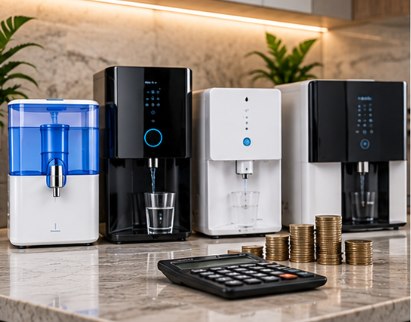
Water purifiers range from simple gravity units to premium RO machines with digital displays and multiple mineral stages. The water purifier price you see on the tag is shaped by a handful of factors. Understanding them helps you pay for what you need and nothing more.
1. Purification technology
This is the biggest price driver.
- Gravity and UF purifiers: the lowest cost, no electricity, no RO membrane.
- UV and UV + UF purifiers: mid-range; they need power but no pump or membrane.
- RO purifiers: higher, because of the pump, membrane, adaptor and valves.
- RO + UV + UF with mineral or alkaline stages: the highest among domestic purifiers.
Choose the technology your water needs first. Our guide RO vs UV vs UF helps you decide.
2. Number of stages
Every extra stage, whether a second carbon filter, UF membrane, mineral cartridge or alkaline cartridge, adds cost at purchase and again at every replacement. More stages are not automatically better; they should match a real problem in your water.
3. Capacity and flow rate
Larger storage tanks and higher litres-per-hour output cost more. A family of four usually does well with 7 to 10 litres of storage. Offices need more; see choosing a purifier for an office.
4. Build and design
Food-grade plastics, stainless steel tanks, copper or steel taps, under-sink designs and premium finishes all add cost. Under-sink models also need more installation work.
5. Features
- TDS controller or adjustable mineral setting
- Filter-life and service indicators, digital displays
- Hot water dispensing or chilled water
- Smart app connectivity
- Water-saving designs with lower reject ratios
These are conveniences. Decide which ones you will actually use.
6. Brand, warranty and service network
Established brands usually cost more but offer wider service availability. Check what the warranty covers: many cover the electricals but not the filters or membrane.
Do not ignore running costs
The purchase price is only part of the story. Over the purifier's life you will pay for filters, membranes, UV lamps and service visits. A cheaper purifier with expensive proprietary cartridges can cost more over five years than a slightly pricier one with standard filters. Our RO filter price guide explains replacement costs.
Plan your budget
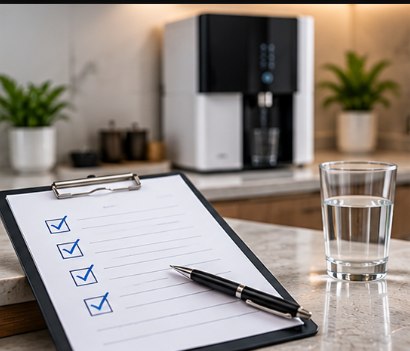
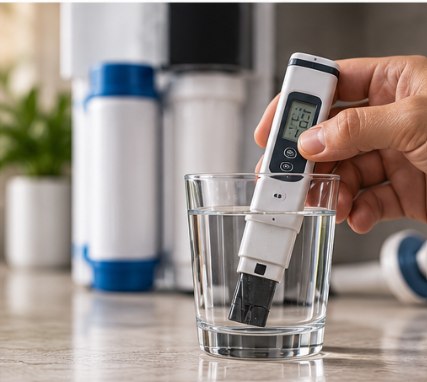
- Test your water and pick the technology.
- Choose capacity for your household.
- Add only the features you will use.
- Check the price of replacement filters and the warranty.
- Budget for installation and a yearly service or AMC.
Work through the home buying checklist. For current RO Trust prices, ask for a quote.
Frequently asked questions
Is a more expensive purifier always better?
No. A higher price often pays for extra stages, design or smart features you may not need. The right purifier is the one matched to your water source and family size.
What running costs should I expect?
Filters, the membrane, the UV lamp and service visits. Over five years, these can add up to a large share of the purchase price, so compare cartridge prices before buying.
Should I buy online or from a local dealer?
Online prices can be lower, but a local dealer can test your water, install the purifier properly and support service and repairs.
Need help with your purifier?
Share your purifier brand and the problem. We will call back with the next available slot.