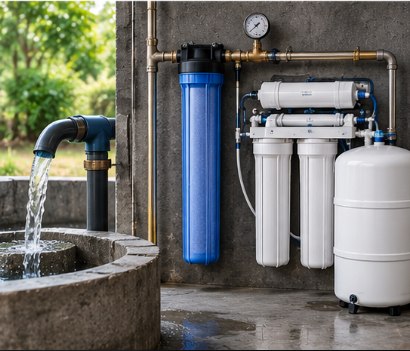
Borewell water is drawn from underground, where it picks up minerals and salts from the rock and soil. It is often hard, high in TDS and variable through the year. That makes it tougher on purifiers than municipal supply. If you are looking for the best water purifier for hard water from a borewell, start with your water, not the brand.
What makes borewell water different
- High TDS. Dissolved salts often run well above 500 mg/L, giving a salty or heavy taste.
- Hardness. Calcium and magnesium leave white scale on taps, kettles and geysers.
- Iron. Gives a metallic taste and yellow-brown stains.
- Sand and silt. Especially after the motor starts or during the monsoon.
- Region-specific contaminants. In some areas, fluoride, nitrate or arsenic can be present.
- Seasonal change. TDS can rise in summer when groundwater levels fall.
Test before you buy
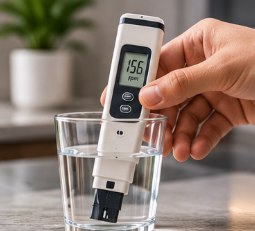
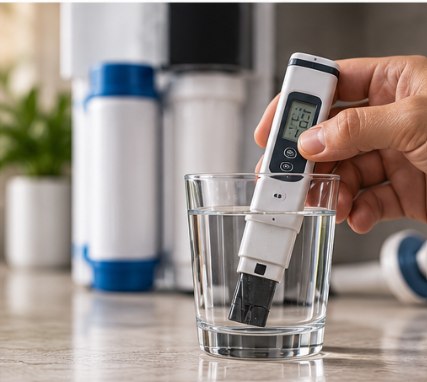
A TDS meter gives a quick first reading. For borewell water, a laboratory water test is worth doing once. It shows hardness, iron, pH and region-specific contaminants that a TDS meter cannot detect. Our guide What is TDS in water? explains what a TDS reading does and does not tell you.
What to look for in a purifier for borewell water
- RO stage rated for your TDS. Check the maximum input TDS the purifier is designed for. Choose one rated comfortably above your reading.
- UV or UF after RO. Borewells can carry bacteria; an extra disinfection stage adds safety.
- Good pre-filtration. A sediment filter, and for heavy silt or iron, an extra external pre-filter or iron-removal filter.
- Booster pump. Needed in nearly all RO units, especially if supply pressure varies.
- Storage capacity. Borewell supply may be pumped only at certain times; 7 to 10 litres of storage helps.
- Optional TDS controller or mineral cartridge. Restores some minerals for taste once TDS is brought down.
An RO + UV + UF purifier is usually the right fit for this kind of water.
Protect the rest of your home too
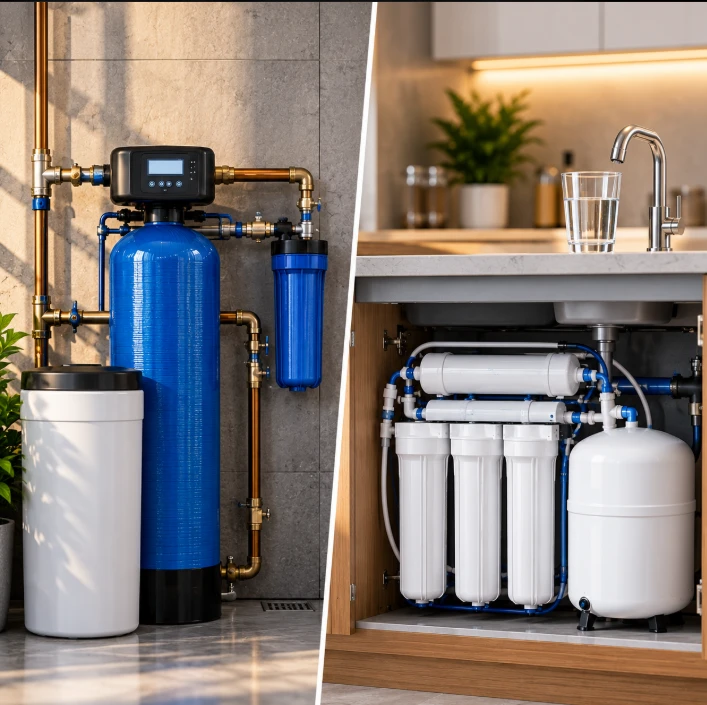
A drinking-water purifier treats only the water you drink. Hard borewell water still scales up bathroom fittings, washing machines and geysers. A water softener on the main line handles that. Read water softener vs RO purifier to see how the two work together.
Maintenance is more frequent
Expect to change sediment filters every 3 months or so with borewell water, and plan for an RO service every 3 months. The membrane may need replacing sooner than with municipal water. An AMC plan often makes sense here.
Want help choosing? Tell us your TDS reading and source, and we will recommend a purifier and any pre-treatment you need.
Frequently asked questions
Is RO necessary for borewell water?
In most cases, yes. Borewell water usually has high TDS and hardness, which only RO reduces effectively. A lab test confirms what your water contains.
Why do filters choke so quickly with borewell water?
Borewell water often carries sand, silt and iron. These clog the sediment filter fast. An extra pre-filter before the purifier extends filter life.
Can I use a water softener instead of RO?
A softener reduces hardness and protects pipes and appliances, but it does not reduce total dissolved salts for drinking. Many homes use a softener for the house and RO for drinking water.
Need help with your purifier?
Share your purifier brand and the problem. We will call back with the next available slot.