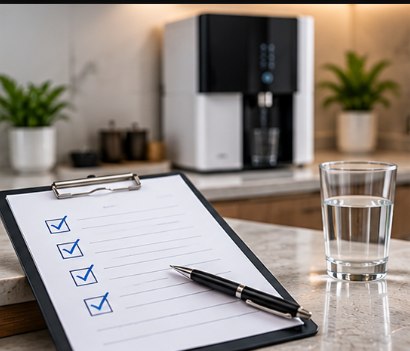
The best water purifier for home use is not the most expensive one or the one with the most stages. It is the one matched to your water, your family and your kitchen. Work through this checklist before you buy.
1. Know your water source
- Municipal supply only
- Borewell water
- Tanker water
- A mix that changes with the season
Borewell and tanker water are much harder on purifiers. See our guides for borewell water and municipal water.
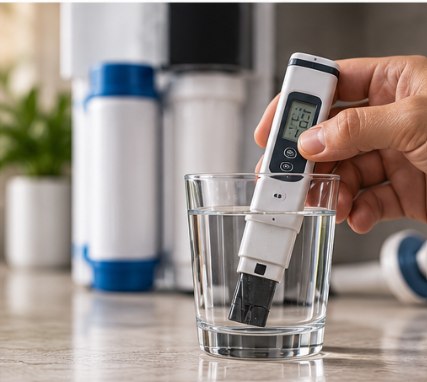
2. Test the TDS
Use a TDS meter or ask us to test it. Below about 300 mg/L, UV + UF is usually enough; above about 500 mg/L, you need RO. Read what TDS means.
3. Pick the right technology
- RO + UV (+ UF): high TDS, borewell, tanker, or uncertain water.
- UV + UF: low-TDS municipal water, no water wastage.
- Mineral or alkaline stage: optional, for taste after RO.
Full comparison: RO vs UV vs UF.
4. Choose capacity
- 1 to 2 people: 5 to 7 litres
- 3 to 5 people: 7 to 10 litres
- 6 or more, or limited supply hours: 10 litres or more
5. Check your kitchen space
- Is there a power socket within reach?
- Is there a water inlet and a drain point nearby?
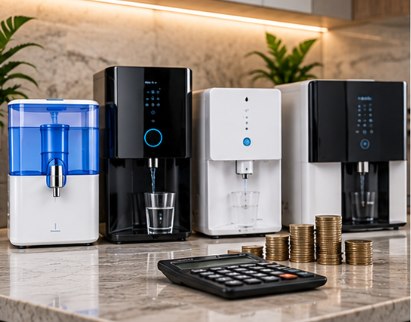
- Wall, counter or under-sink: which space do you have?
- Keep the purifier away from the stove and direct sunlight.
6. Look at running costs, not just the price
- How much do replacement filters and the membrane cost?
- Are cartridges standard or proprietary to the brand?
- How much water does it reject (for RO)?
- What is the power consumption?
Our price guide explains what drives both purchase and running costs.
7. Warranty and certifications
- What does the warranty cover: electricals, membrane, filters?
- Is the product certified to a recognised standard? Ask the seller for documentation.
8. Installation and after-sales service
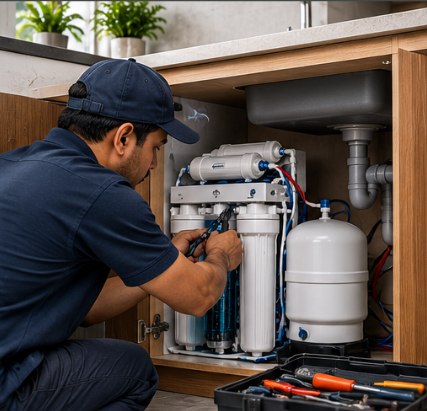
- Is installation included, and what does it cover? See RO installation charges.
- Who will service it, and how quickly can they come?
- Is an AMC plan available after the warranty?
Quick summary
Test water → choose technology → choose capacity → check space → compare running costs → confirm warranty, installation and service.
Ready to choose? Send us your TDS reading and family size for a recommendation.
Frequently asked questions
What size purifier does a family of four need?
A storage tank of 7 to 10 litres usually covers drinking and cooking for four people. Larger families, or homes with fixed water supply hours, may want more.
Wall-mounted, countertop or under-sink: which is best?
Wall-mounted saves counter space, countertop is easy to move, and under-sink keeps the kitchen clutter-free but needs space in the cabinet and a tap hole.
Should I buy a purifier before testing my water?
No. A TDS test, and for borewell water a lab test, should come first. It decides whether you need RO at all.
Need help with your purifier?
Share your purifier brand and the problem. We will call back with the next available slot.